07 — Property Booking Platform
Shortlet Lagos
Property discovery, search, filtering and booking inside a reusable responsive design system.
- Role
- Product designer & researcher
- Year
- 2024
- Focus
- Marketplace UX, PropTech, Booking Flows, Mobile UX, Investment UX
- Status
- Live product
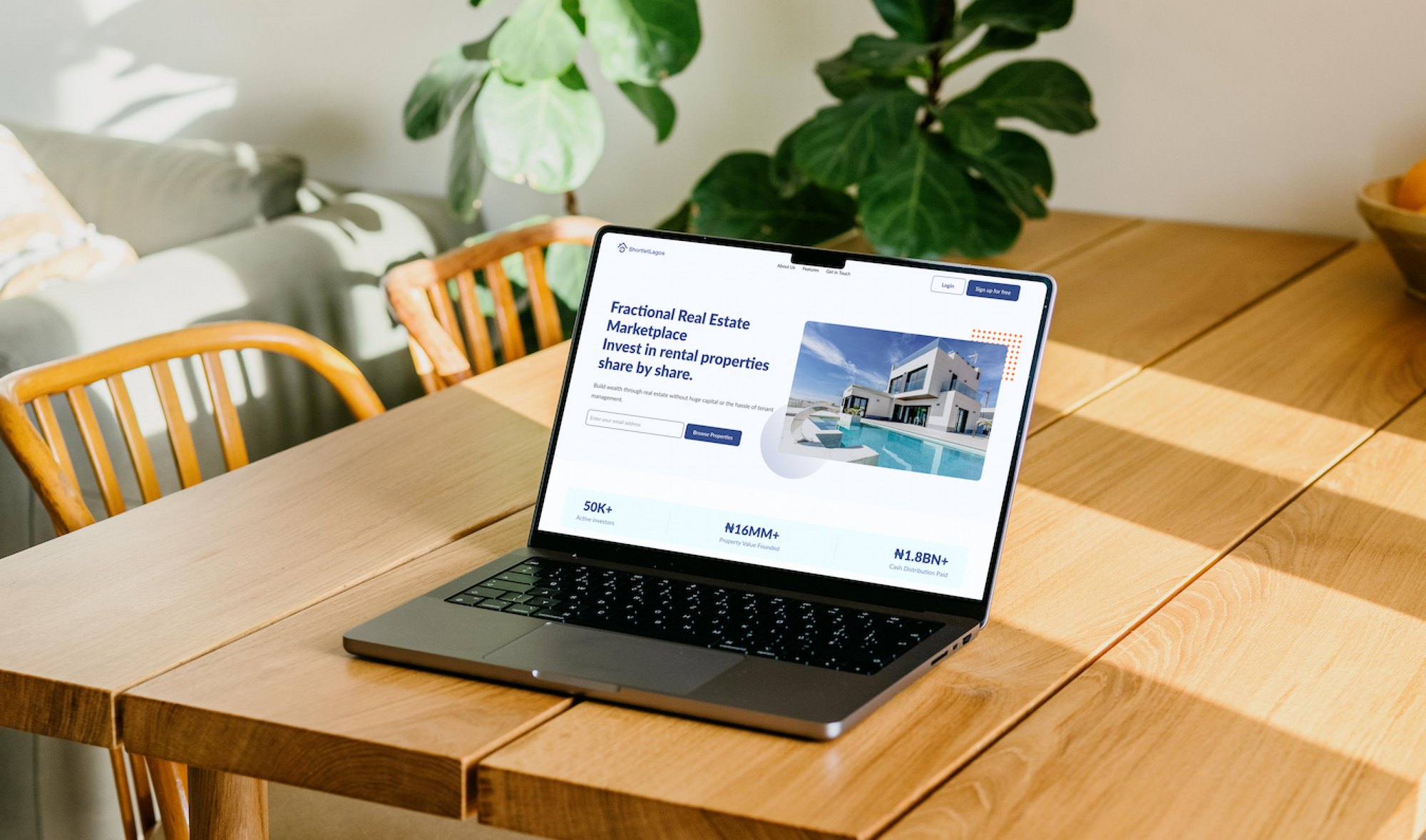 SHORTLET LAGOS — 2024
Overview
Shortlet Lagos runs two products against one portfolio of apartments: guests book short stays, and investors buy shares in the same rental properties from ₦50,000 upward. I owned end-to-end UX/UI design and research across both — discovery, search, filtering and booking on the guest side, and the property marketplace on the investment side.
At a glance
- Role
- Product designer & researcher
- Ownership
- End-to-end ownership across both audiences
- Product status
- Live product
- Platform
- Mobile-first guest experience, desktop-first investment experience
- Primary users
- Guests booking short stays; investors buying fractional property shares
- Main focus
- Two audiences, two decision speeds, one portfolio of apartments
- Product
- Shortlet Lagos — short-stay booking and fractional property investment against one portfolio, live at shortlet-lagos.com
- Scope
- Research and user flows, guest discovery, search, filtering and booking, the investment marketplace, and a responsive design system
- Constraints
- Two audiences making opposite kinds of decision about the same apartments
Deliverables
- User flows & research
- Guest booking journey
- Fractional investment marketplace
- Property listing & detail design
- Responsive design system
- High-fidelity UI & prototype
My contribution
I owned the end-to-end UX and UI across both sides of the product: guest discovery, search, filtering and booking on mobile, and the fractional investment marketplace on desktop — property listings, share mechanics and entry pricing. I built the responsive component set both sides share, and designed the brand identity the platform sits inside.
The problem
The same apartment has to read two completely different ways depending on who is looking at it. To a guest it is somewhere to sleep next weekend, judged on photos, location and whether the dates are free — a decision made in minutes, usually on a phone. To an investor it is an asset, judged on yield, entry price and what happens to the money afterwards — a decision made slowly, at a desk, and one that carries real risk. Fractional property investment also has a credibility problem before it has a usability one: asking someone to put money into a share of a building they will never hold the keys to means the interface has to make the mechanics obvious rather than exciting. Designing both without letting the marketing energy of the booking side leak into the investment side was the core problem.
What made this hard
The same apartment has to read two ways. A guest decides in minutes, on a phone, on photos, location and whether the dates are free. An investor decides slowly, at a desk, on yield and entry price and what happens to the money afterwards, with real risk attached. The pull throughout was to let the booking side's marketing energy carry across into the investment side, because that energy converts — and that is exactly where it would do damage, since making an investment decision feel effortless is not the same as making it clear. Holding the two apart while keeping them recognisably one company was the constant tension, and it is why the investment side leads with the buying mechanic and the entry price rather than with projected returns.
Research & discovery
Research status — Product-design-led, with research into how guests shortlist
- Who
- Guests deciding in minutes on a phone, and investors deciding slowly at a desk with real money at risk.
- Investigated
- Which signals drive trust in a short-let listing, and what an investor needs before a fractional share is comprehensible.
- Learned
- The two decisions have opposite tolerances — the energy that converts a booking is the energy that undermines an investment decision.
- Changed
- The two entry points were kept deliberately separate, and the investment side leads with the buying mechanic and the ₦50,000 minimum before it discusses return.
- Still open
- Whether people actually understand what a fractional share is — comprehension, not conversion, is the right measure here.
- Next test
- Run a comprehension test with first-time investors on what a share entitles them to, and check whether guests arriving to book ever discover the investment side at all.
Key decisions
- 01
Split the product into two entry points rather than one blended homepage, so a guest and an investor are answering different questions from the first screen instead of being sold the wrong one.
- 02
Reduced the guest search to the four things a stay actually turns on — where, check-in, check-out, who — and kept them in a single card above the listings, so the whole query is visible and editable in one place on a phone.
- 03
Led the investment side with the mechanic rather than the promise: buy shares in rental properties, share by share, from a stated minimum, so the model is understood before any return is discussed.
- 04
Put the entry price on the surface. Naming the ₦50,000 minimum up front lets someone rule themselves in or out immediately, instead of discovering the threshold after signing up.
- 05
Kept the property itself central on the investment side — gallery, valuation and share count together — so an investment decision is still anchored in a real building rather than an abstract instrument.
- 06
Wrote the value proposition against the objection rather than around it: building wealth through real estate without huge capital or the hassle of tenant management names the two reasons people rule property out.
- 07
Built responsive components in Figma with Auto Layout and variants for listing cards, calendars, forms and property tiles, so the guest and investor surfaces stayed recognisably one company.
What changed
One platform serving two audiences with genuinely different decisions to make — a mobile booking journey reduced to the four questions a stay depends on, and a fractional investment marketplace that leads with its mechanics and its entry price rather than with projected returns. Both sit on a shared responsive component set. The product is live at shortlet-lagos.com.
Scope & context
- Product scope
2
Audiences served by one portfolio — guests and investors
- Product scope
4
Inputs the guest search reduces to — where, check-in, check-out, who
- Product scope
₦50,000
Entry point for a fractional property share
- Product scope
23-page
Brand guideline designed alongside the product
Evidence
The product is live at shortlet-lagos.com. The guest search is reduced to the four inputs a stay actually depends on, and the investment side leads with the buying mechanic and the minimum entry price before it discusses return — so someone can rule themselves in or out before they sign up rather than after. Both sides ship on one responsive component set, and the brand they sit inside is mine too: the 23-page Shortlet Lagos brand guideline is readable in full on the brand page.
See the design system behind this →What I would improve next
The question I most want answered is whether people understand what they are buying. A share in a rental property is not an intuitive instrument, and comprehension rather than conversion is the right measure of whether that page works — a short comprehension test with first-time investors would settle it. I would also check whether guests who arrive to book ever discover the investment side at all, since the two entry points are deliberately separate.
With more time
I would show investors the operating reality behind a share — occupancy, maintenance, the actual months a property earned — because a fractional stake in a building people sleep in is only trustworthy if the performance behind it is visible.
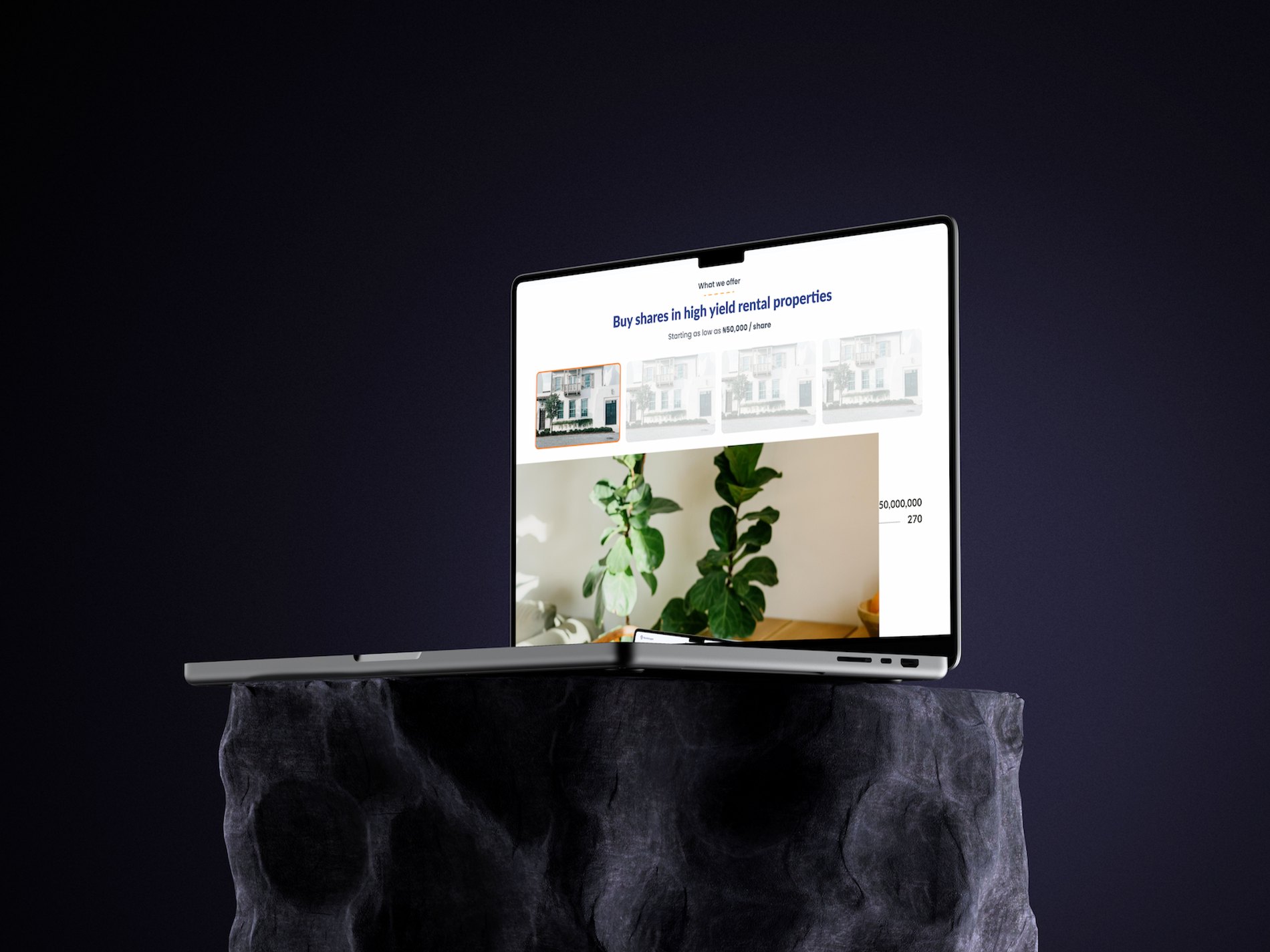
The investment side: shares in high-yield rental properties from ₦50,000, with the property gallery, valuation and share count shown together — the same apartment a guest would book, presented as an asset 
The guest side on mobile: where, check-in, check-out and who, held in a single search card above the listings — the four questions a stay actually turns on