MY ROLE · End-to-end product design and AI model evaluation
Kremor AI
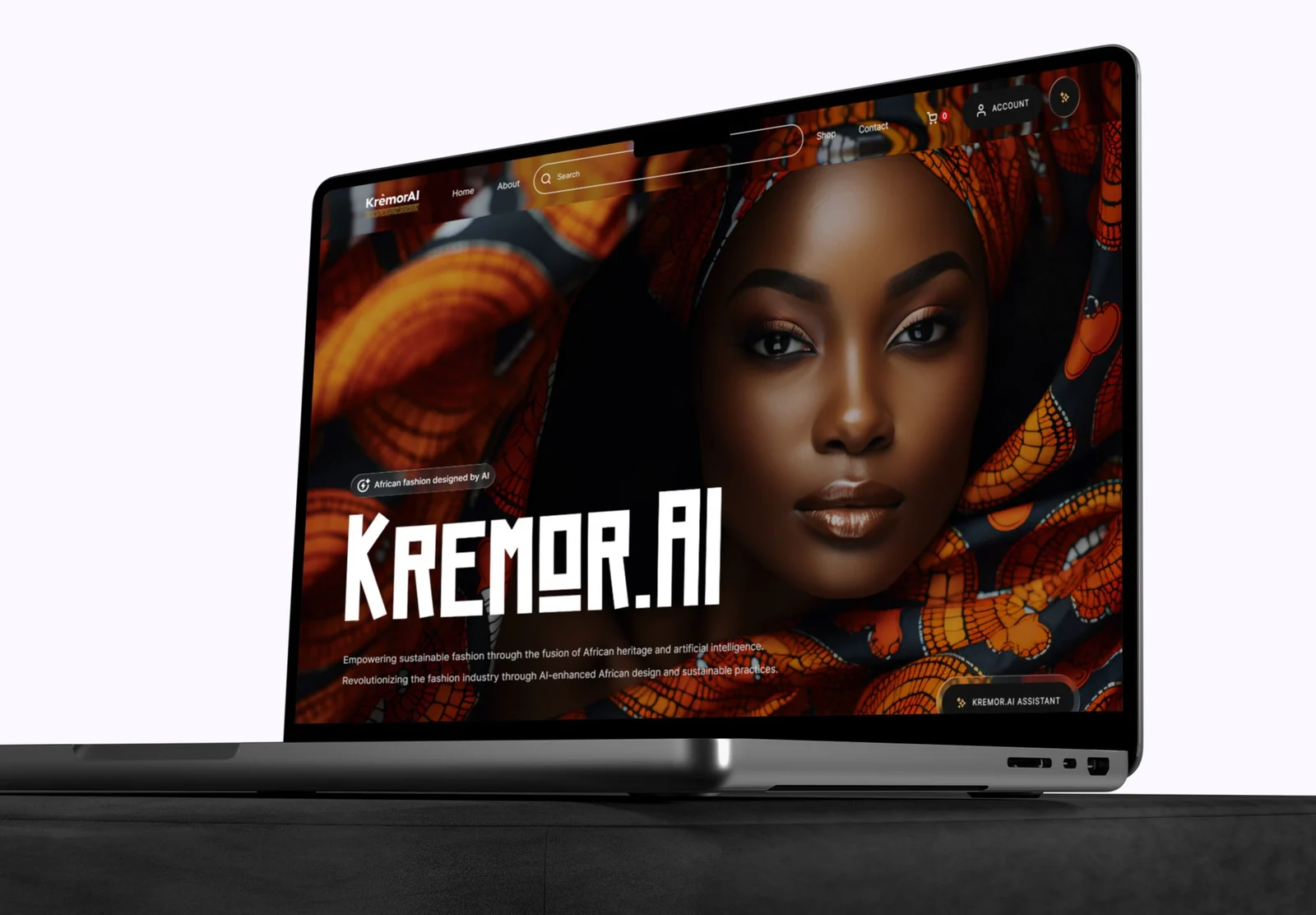
I designed Kremor AI from the creative workspace through the storefront and workshop operations. I wanted an idea for a garment to have a clear path to the people who could actually make it.
01What I wanted to solve
A generated image is not a finished garment. I worked on prompting and iteration alongside measurements, approvals, artisan roles and production. Separately, my model-evaluation work covered 96+ complex AI interaction tasks.
02The decisions that mattered
Give people a useful first move.
I used quick actions and conversational openers for people who know the occasion or fabric but not how to write a design prompt.
Respect the textile language.
I named Ankara, Aso-Oke, Adire and Kente rather than treating African fashion as one generic style.
Make the workshop accountable.
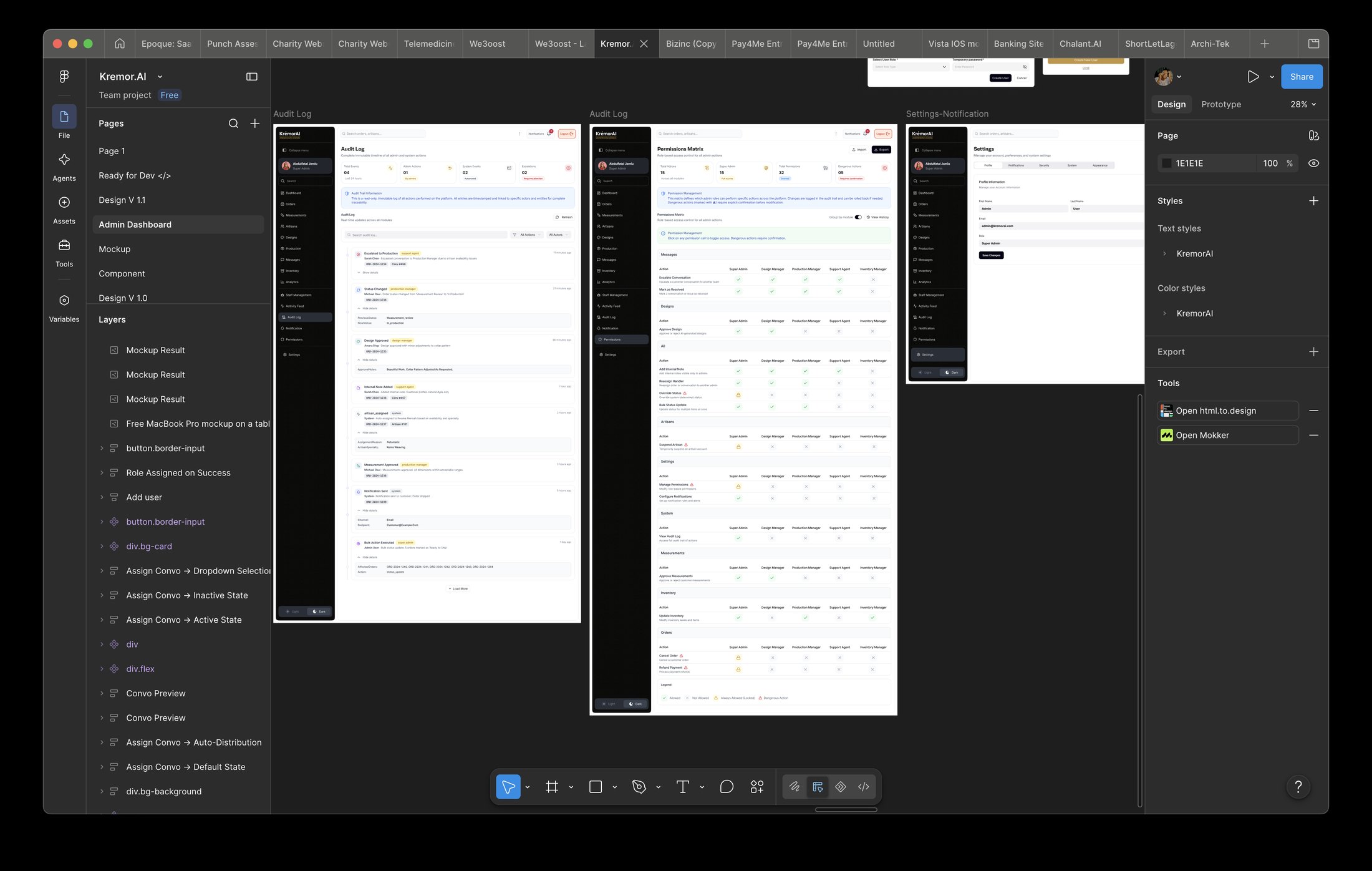
I designed role-based permissions, confirmations for dangerous actions and a read-only audit history.
03See the work
The screens below show how those decisions came together.
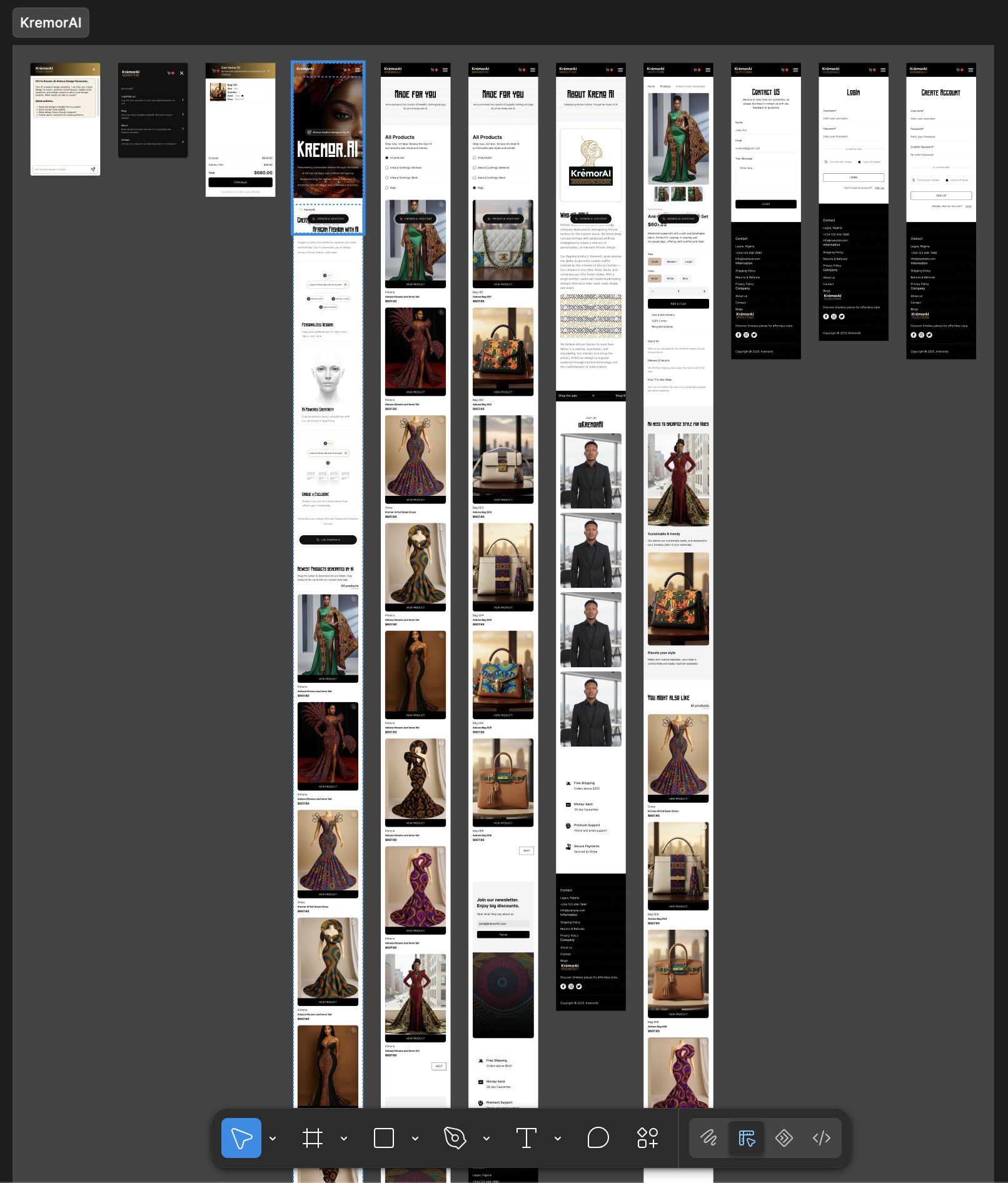
View full sizeThe mobile system end to end, the design assistant with its quick actions, the generative home page, shop filtered by Ankara womenswear, menswear and bags, the product detail with size, colour, fabric and how the piece was made, About, contact, login and account creationMore screens and supporting work +
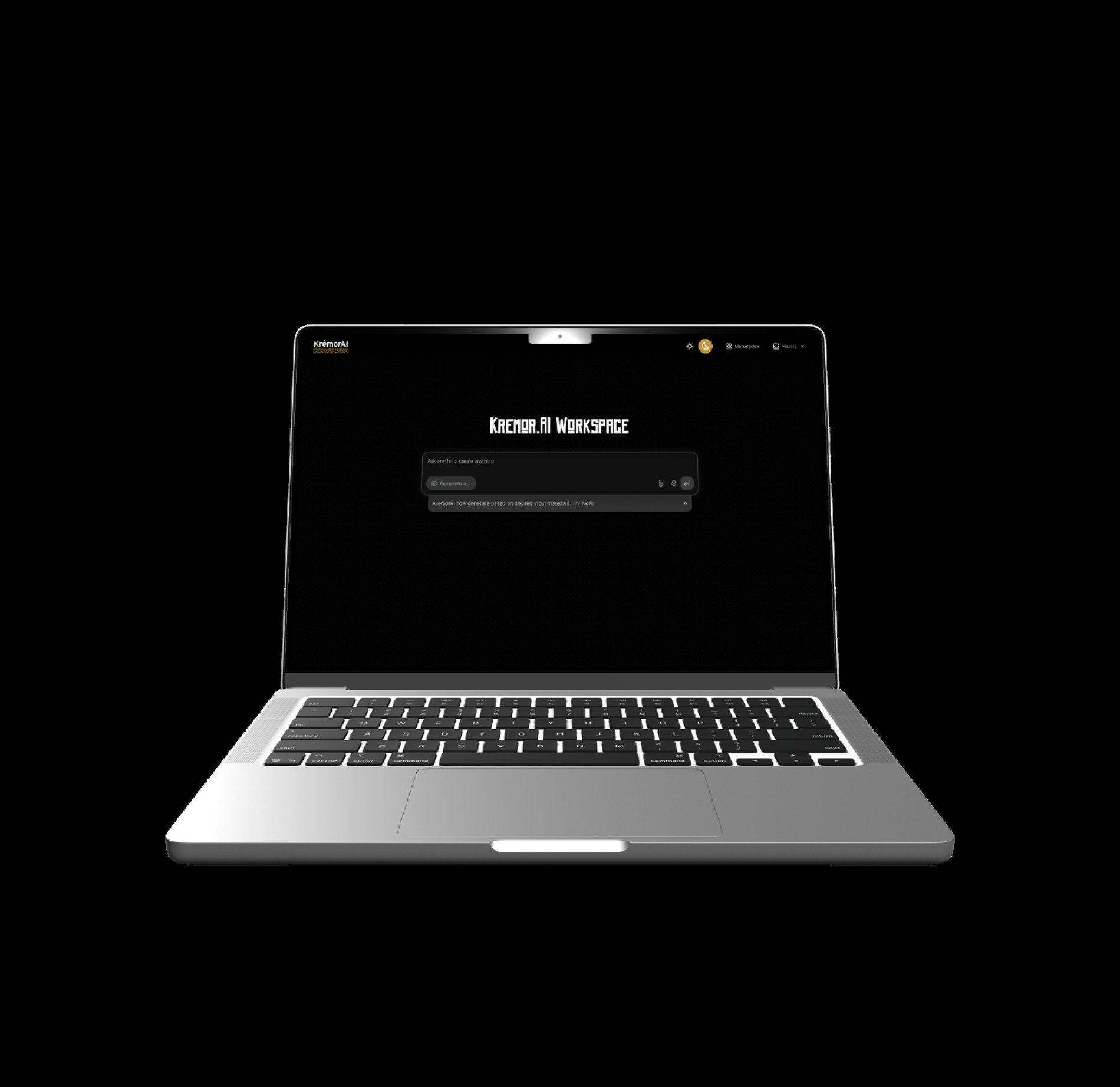
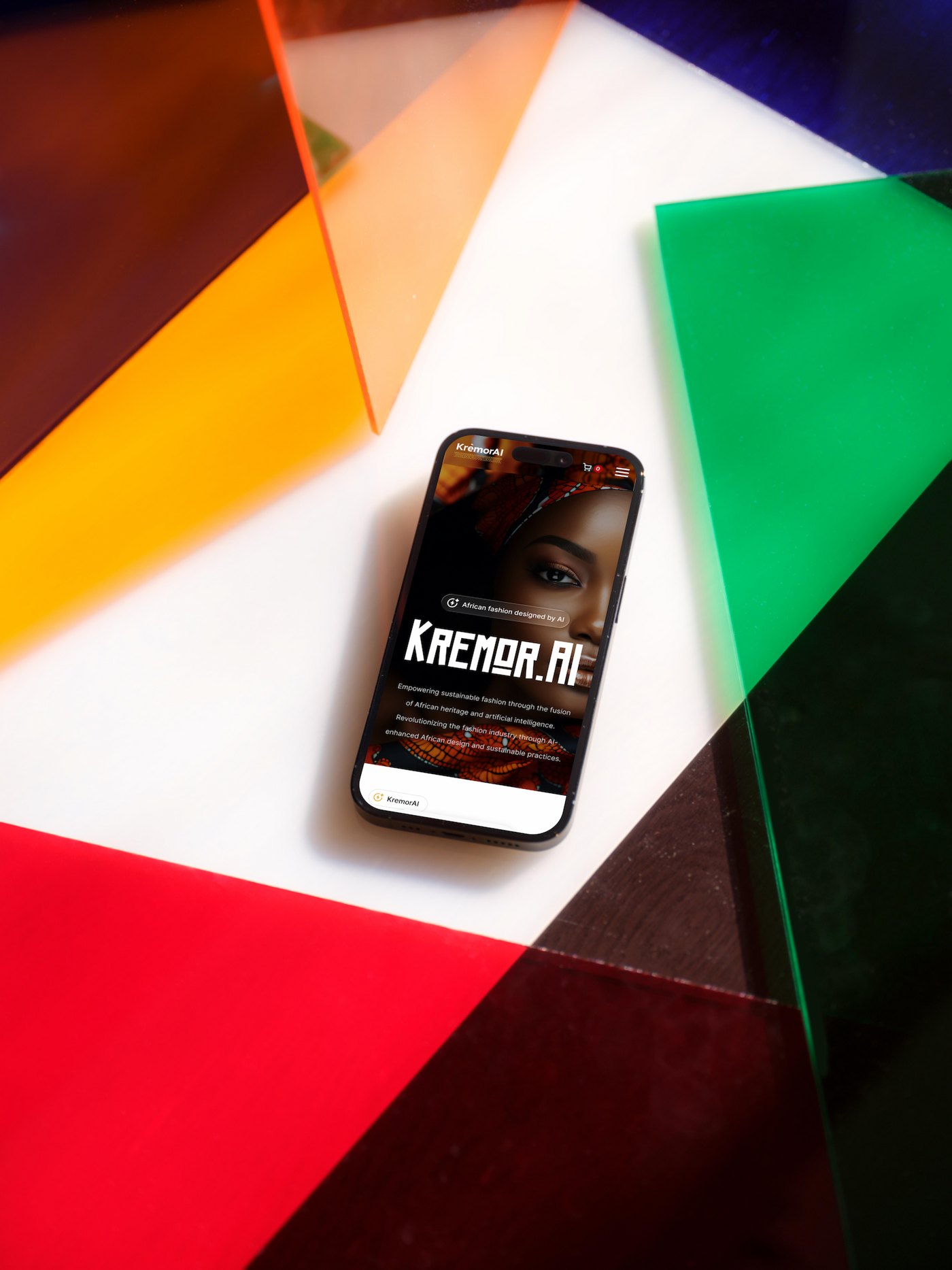
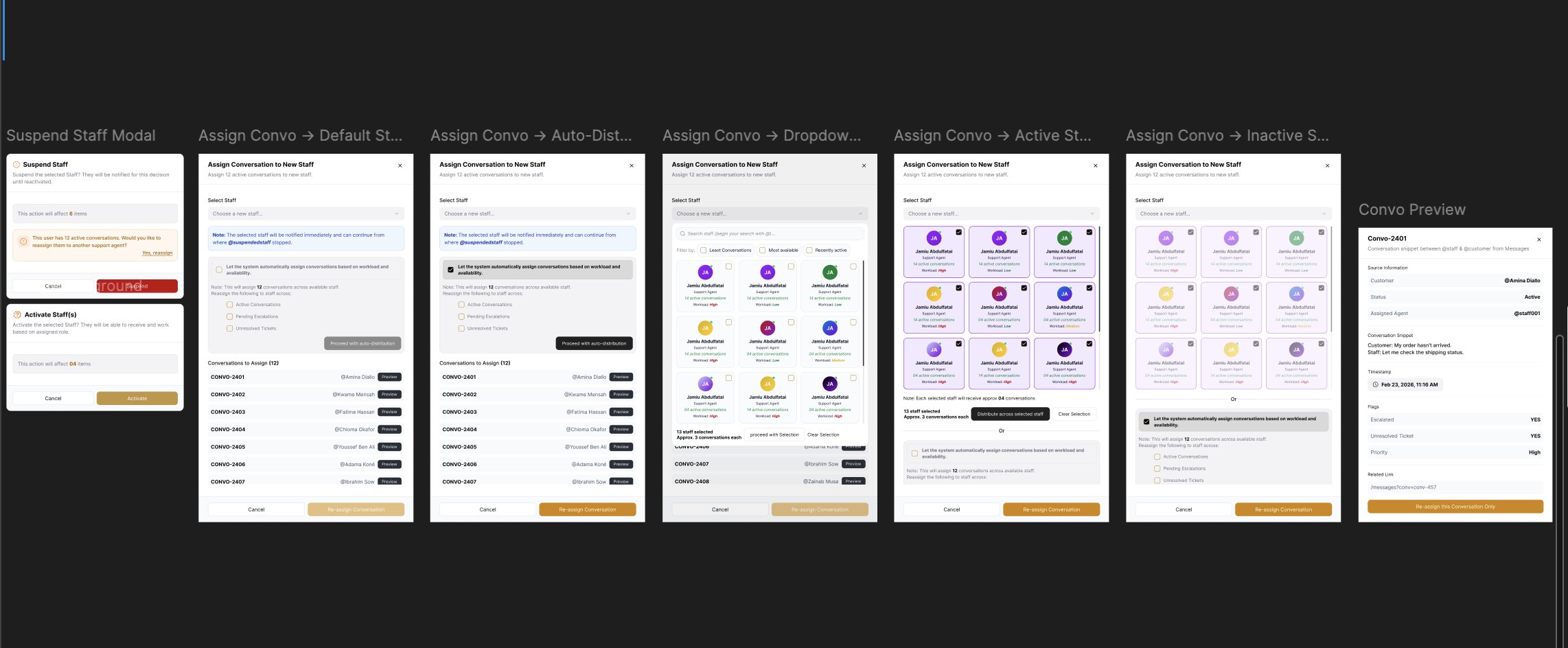
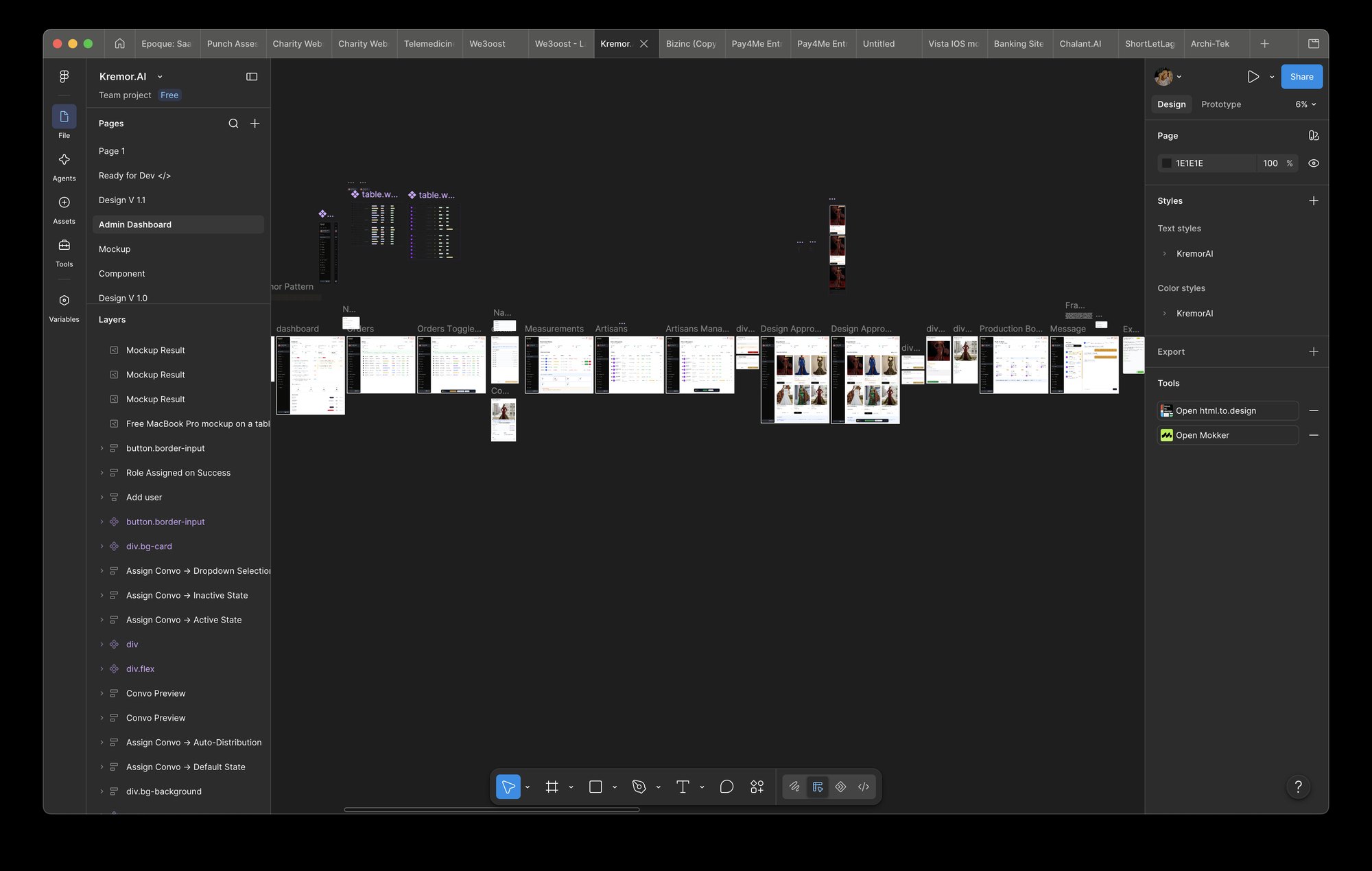
View full sizeKremor.AI Workspace: one prompt field reading ask anything, create anything, with attachment and voice input, a generate action, and Marketplace and History in the top bar, so a session of creative work can be returned to rather than restartedView full sizeThe storefront on a phone, the hero states the proposition in one line: African fashion designed by AI, sustainable, and rooted in heritage rather than borrowing from itView full sizeThe accountability layer: an immutable audit log where every action is attributed to the role that took it, and a permissions matrix across Super Admin, Design Manager, Production Manager, Support Agent and Inventory Manager, with dangerous actions marked and locked permissions shown as lockedView full sizeReassigning work when a support agent is suspended: the modal raises their twelve open conversations first, then offers auto-distribution by workload or manual selection, with each agent's active conversation count and workload level visible before you chooseView full sizeThe admin dashboard laid out in the working Figma file, orders, measurements, artisans, design approvals, production board, messages and exports as one continuous pipeline, alongside the Ready for Dev and component pages
04What I can show, and what I would test
The published designs show the creative and operational surfaces, and the founder reference supports my design and evaluation work. I would next check whether the five designed roles match how the workshop operates. I have not claimed participant usability results.