02 — Multi-Country Corporate Banking
Vista Digital Banking
One banking app for businesses operating across four markets — entities, currencies and approval mandates included.
- Role
- UI/UX Designer & Front-End Developer, ITSS
- Year
- 2022 — 2024
- Focus
- Fintech UX, Enterprise UX, Service Design, Design Systems, Front-End
- Status
- Shipped product
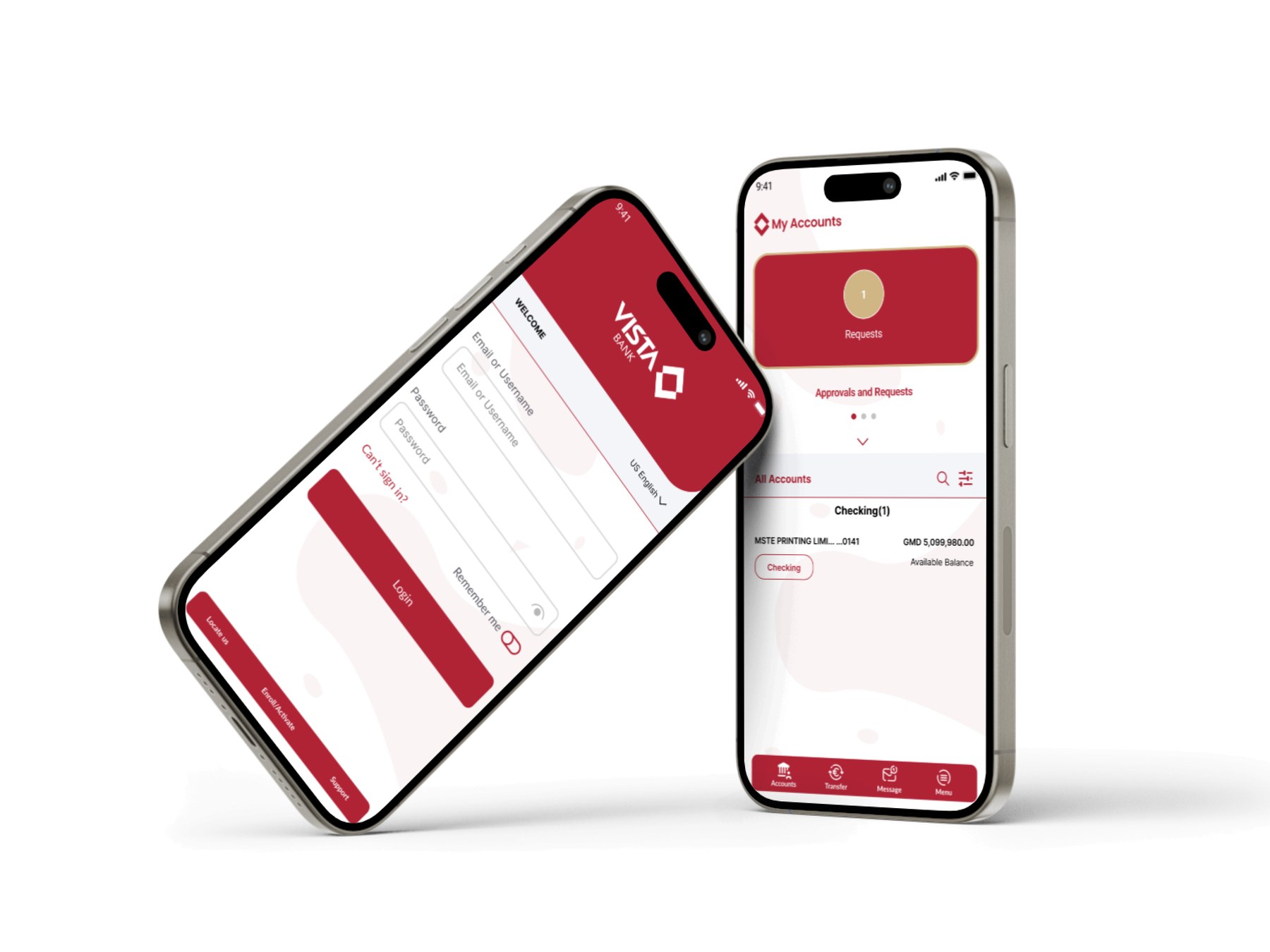 VISTA DIGITAL BANKING — 2022 — 2024
Overview
Vista is a banking group operating across several West African markets. I joined ITSS in May 2022 as an intern on the programme and moved onto staff during it, working on the digital banking product — corporate and retail — through to April 2024, covering onboarding and identity verification, account dashboards, transfer and approval journeys. The work was recognised with ITSS's Most Outstanding Intern of the Year award for my contribution to Vista. The role spanned UI design, digital and graphic design for campaigns, and front-end work, delivered across four localised market subsidiaries — Gambia, Guinea, Sierra Leone and Burkina Faso.
At a glance
- Role
- UI/UX Designer & Front-End Developer, ITSS
- Ownership
- Product design across corporate and retail journeys, plus front-end review
- Timeline
- May 2022 – April 2024
- Product status
- Shipped product
- Platform
- Mobile banking app, with campaign and marketing surfaces
- Primary users
- Corporate mandate holders and retail customers across four markets
- Main focus
- Multi-entity, multi-currency banking; approval workflows; a design system spanning four subsidiaries
- Product
- Vista digital banking — corporate and retail, across four West African subsidiaries
- Team
- ITSS (Geneva) delivering for the Vista banking group; joined as an intern on the programme and moved onto staff during it
- Scope
- Onboarding and identity verification, account dashboards, transfer and approval journeys, campaign and graphic design, front-end review in HTML/CSS
- Constraints
- Four regulated markets, two languages, separate currencies, and corporate approval mandates
Deliverables
- Onboarding & identity verification
- Account dashboards & filtering
- Transfer & approval workflows
- Multi-entity architecture
- Design system across four markets
- English & French localisation
- Campaign & graphic design
- Front-end review (HTML/CSS)
My contribution
I designed the digital banking product across corporate and retail journeys — onboarding and identity verification, account dashboards, transfers, approval mandates, secure messaging and payments — for four localised market subsidiaries. I built one design system that held across all four while allowing local differences in language, currency and regulatory copy, produced the campaign and graphic design that sat on top of it, and reviewed front-end builds in HTML/CSS to keep implementation faithful to the designs.
The problem
Business banking in a multi-market group breaks the assumption every consumer banking app is built on: that one person means one account in one currency in one country. A Vista customer might be a finance manager holding mandates over several legal entities across Gambia, Guinea, Sierra Leone and Burkina Faso, each with its own currency, its own regulator and its own local rules — and payments they initiate may need someone else's approval before money moves. Designing for that means holding real institutional complexity on a phone screen without either flattening it into something unsafe or exposing all of it at once. The subsidiaries added a second problem on top: four markets — anglophone and francophone, each with its own currency and regulator — needed to feel like one bank without ignoring what made each of them local.
What made this hard
Four subsidiaries — Gambia, Sierra Leone, Guinea and Burkina Faso — each with its own currency, regulator and language meant every shared screen had to survive four sets of local requirements without fragmenting into four products. Anglophone and francophone markets pushed language selection up into sign-in rather than leaving it in settings: a small decision with a large consequence, because it sits in front of the most sensitive screen in the app. Corporate banking then broke the assumption the retail patterns were built on — one person, one account, one currency, one country — so patterns that worked for retail customers had to be rethought rather than reused for a finance manager holding mandates across several legal entities.
Research & discovery
Research status — Requirements-led discovery with product and engineering teams
- Who
- Corporate mandate holders operating across several legal entities, alongside retail customers.
- Investigated
- Whether the retail patterns could carry corporate banking, where one person may act for several entities in different currencies and regulators.
- Learned
- They could not. Corporate banking breaks the one-person-one-account assumption the retail flows were built on, and approvals are other people's work waiting on you rather than notifications.
- Changed
- Entity became top-level context beneath the user's name rather than a setting, and pending approvals moved above the fold on the accounts screen with their own counts.
- Still open
- Post-launch adoption and task-completion behaviour, which I did not have access to.
- Next test
- Test whether mandate holders can tell at a glance which entity they are operating in before initiating a transfer, with real corporate customers rather than internal reviewers.
Key decisions
- 01
Made entity the top-level context rather than a setting. The switcher sits directly beneath the user's name and last sign-in on the menu screen, so which legal entity and market you are acting in is answered before any transaction begins — the question that determines what every subsequent number and permission means.
- 02
Designed approvals as a first-class destination, not a notification. Pending requests — bulk payment, single payment, other — are surfaced above the fold on the accounts screen with their own counts, because in corporate banking the blocking task is usually someone else's payment waiting on you.
- 03
Built filtering for people who hold many accounts. Default and custom views, sorting by name or balance, and account-type selection let a user with dozens of accounts across entities save the shape they actually work in, rather than scrolling a flat list every session.
- 04
Kept balances in local currency and led with available balance rather than ledger balance, since the practical question before a transfer is what can actually be moved today.
- 05
Anchored navigation on the four things corporate users return to — accounts, transfers, messages and menu — and kept secure messaging and support inside the app, because for business banking the alternative is a branch visit.
- 06
Treated last sign-in, session state and language selection as trust signals rather than clutter, surfacing them where an account holder checks for anything unexpected.
- 07
Built one design system across the four subsidiaries so shared journeys stayed consistent while local requirements, languages and regulatory copy could vary. With Gambia and Sierra Leone operating in English and Guinea and Burkina Faso in French, language selection had to be a first-class part of the sign-in experience rather than a setting found later.
- 08
Carried the same visual system into campaign and graphic design for the product, and used HTML/CSS to review front-end builds against the designs, keeping interfaces responsive and pixel-accurate through implementation.
What changed
A digital banking product that treats multi-entity, multi-currency, multi-market operation as the normal case rather than an edge case — with approvals designed as core workflow, account views that scale to real portfolios, and one design system serving four localised subsidiaries across Gambia, Guinea, Sierra Leone and Burkina Faso. The work was recognised with ITSS's Most Outstanding Intern of the Year award for contributions to Vista.
Scope & context
- Product scope
4
West African markets — Gambia, Sierra Leone, Guinea, Burkina Faso
- Product scope
4
Localised subsidiaries on one design system
- Product scope
2
Languages — English and French, selected at sign-in
- Product scope
Multi-entity
Mandates held across separate legal entities and currencies
Evidence
The work was recognised with ITSS's Most Outstanding Intern of the Year award, and the letter names the Vista Bank project UI/UX design specifically as what it was awarded for — client-side recognition tied to this project rather than a general commendation, readable in full on the credentials page. The design shipped across four localised subsidiaries on a single system, with entity, currency and language handled as first-class context rather than as settings.
What I would improve next
The entity switcher carries the most risk in the product, because acting in the wrong entity means moving the wrong company's money. I would test whether mandate holders can tell at a glance which entity they are operating in before they initiate a transfer, and whether the approval counts read as work assigned to them rather than as notifications they can dismiss. That needs real corporate customers rather than internal reviewers.
With more time
I would design the approval queue as a working surface rather than a list — batch review, delegation when someone is away, and a clear audit trail of who approved what — since that is where a corporate finance team actually spends its time.
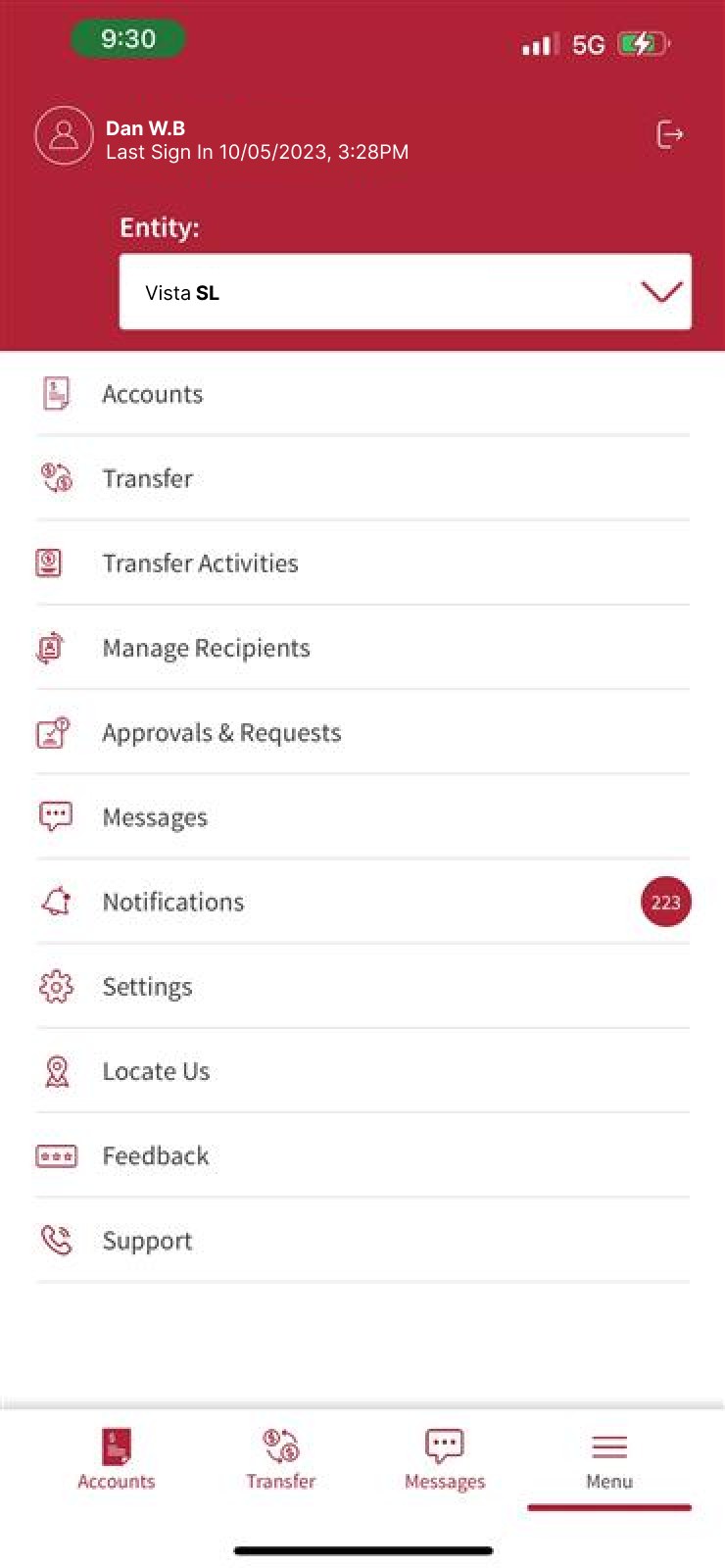
The menu screen, where the entity switcher sits directly under the user's name and last sign-in — one person moving between the legal entities and countries they hold mandates for, above transfer activities, recipient management and approvals 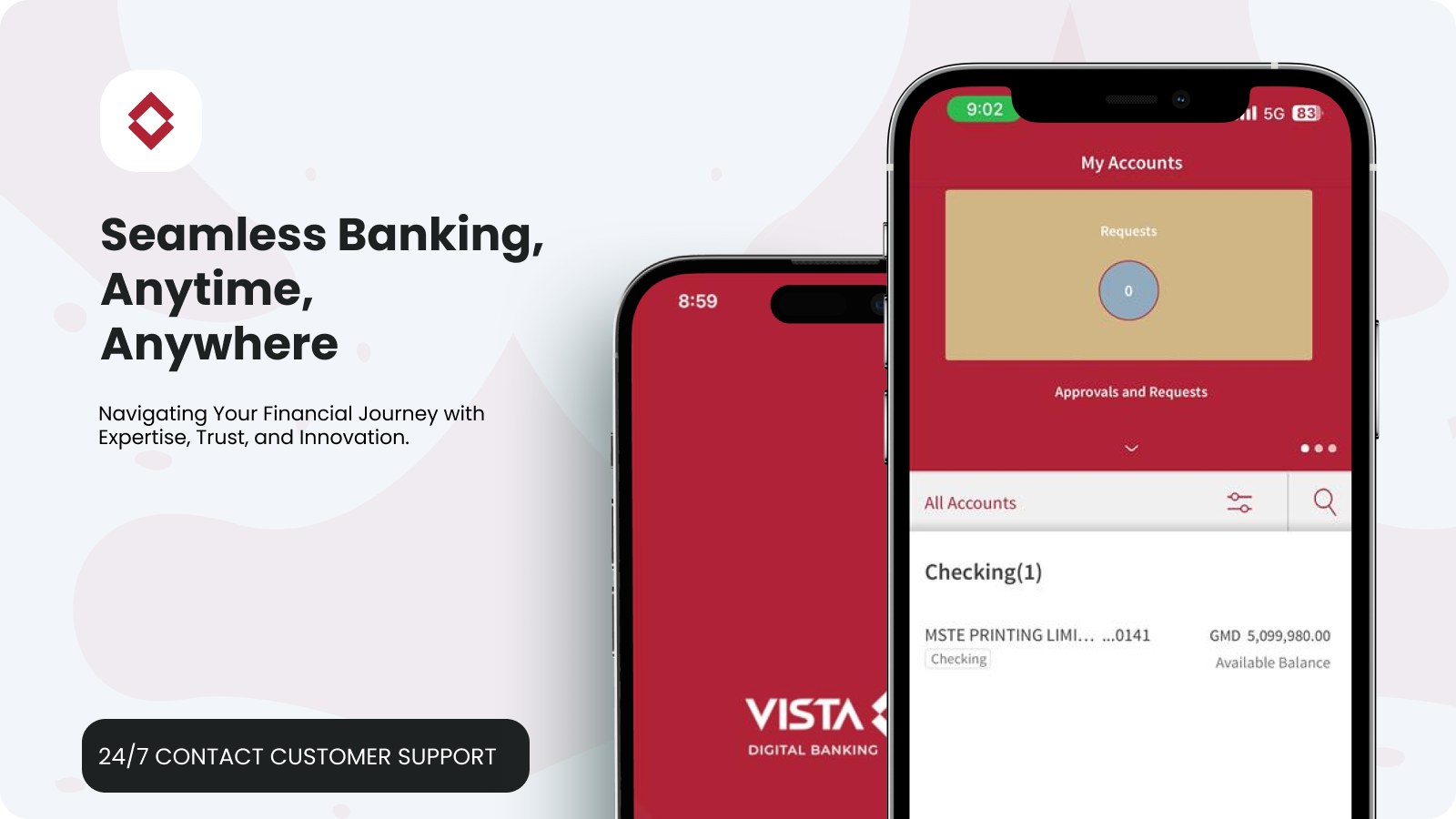
My Accounts: pending approvals surfaced above the fold, then accounts grouped by type with balances shown in local currency 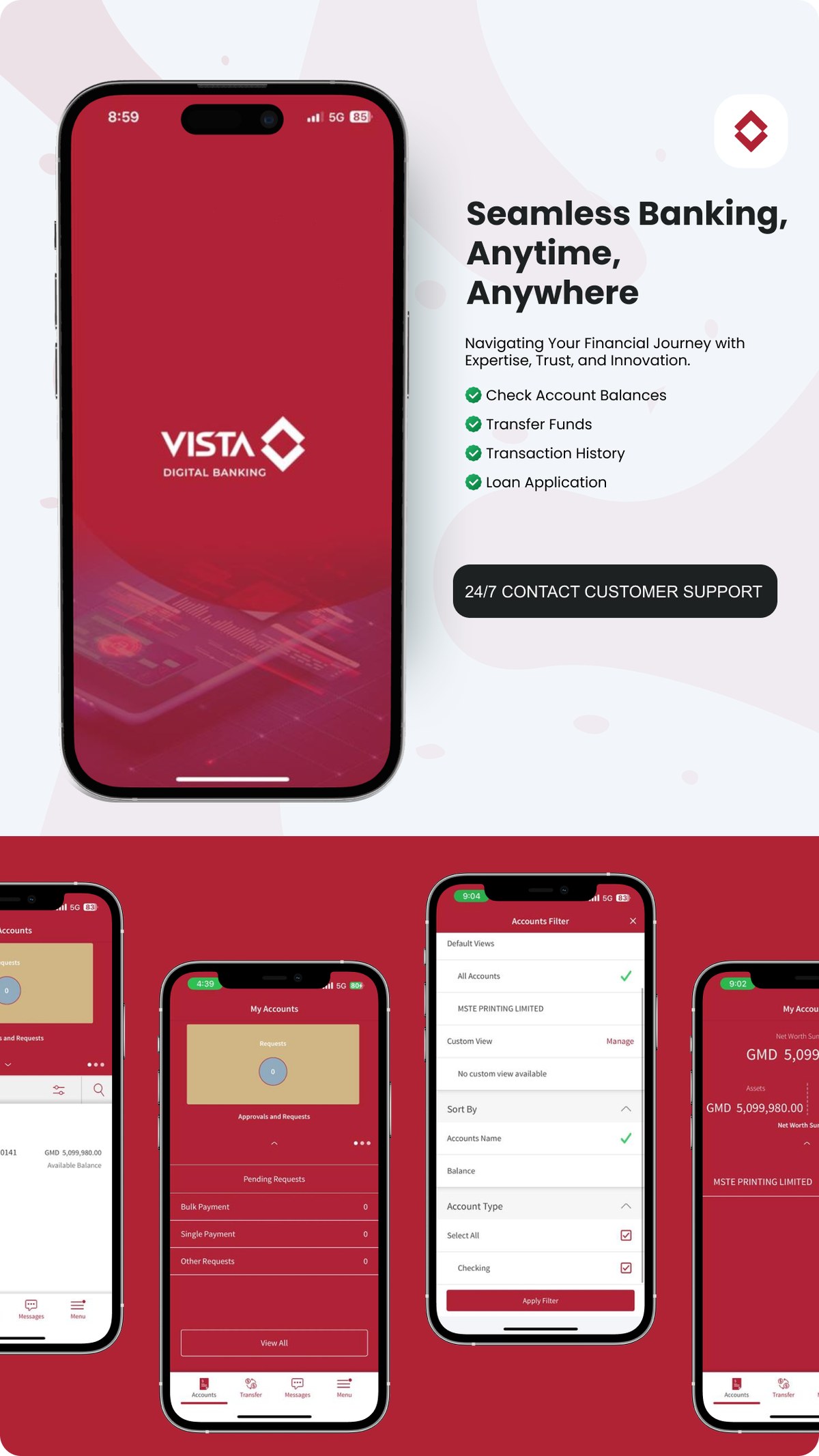
Marketing and product screens together — the campaign framing of the app alongside account filtering, custom views, pending bulk and single payment requests, and net worth summaries